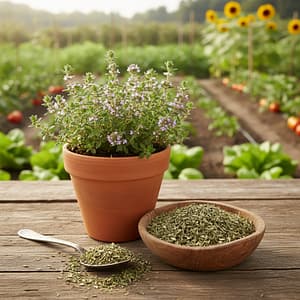
Thyme leaves

I. General Information

A. Scientific Name:

Thymus vulgaris

B. Alternative Names:

Common Thyme

C. Pronunciation:

/taɪm liːvz/

II. Sourcing and Origin

A. Source:

A small herb from the mint family.

B. Geographic Origin:

Native to the Mediterranean region and parts of Europe and Asia.

C. Method of Processing:

The small leaves are harvested and can be used fresh or dried. Drying concentrates the flavor.

III. Properties and Uses

A. Physical Properties:

Tiny, green-grey leaves that grow on woody stems. The aroma is earthy, slightly floral, and minty.

B. Chemical Composition:

The main active component is thymol, which gives it its strong flavor and antiseptic properties. It also contains carvacrol and other flavonoids.

C. Primary Uses:

Skincare: Used in some topical formulations for its antiseptic and antibacterial properties.

Haircare: Can be infused in hair rinses to promote a healthy scalp.

Wellness: Used in traditional medicine to support respiratory health and as a powerful antioxidant.

Culinary: A versatile herb used to season meats, vegetables, soups, and stews. It's a key ingredient in many European and Middle Eastern cuisines.

Household: Due to its antimicrobial properties, it can be used in natural cleaning solutions.

D. Key Benefits:

Possesses strong antibacterial and antifungal properties, and is rich in antioxidants.

IV. Safety and Considerations

A. Potential Allergies:

Can cause allergic reactions in some individuals, particularly those sensitive to other herbs in the mint family.

B. Best Practices for Use:

Add dried thyme at the beginning of cooking to allow its flavor to fully infuse into the dish.

C. Special Precautions:

Thyme essential oil is highly concentrated and should be diluted before topical application.

V. Fun & Educational Facts

A. Historical Context:

The ancient Greeks believed thyme signified courage and used it in their baths and as incense in temples. The Romans also used it to purify their homes.

B. Did You Know?

Thymol, one of thyme's primary compounds, is an active ingredient in many commercial mouthwashes and hand sanitizers.

C. DIY Recipe Idea:

Roasted chicken with thyme and lemon, thyme and garlic potatoes, beef stew.