
- Home
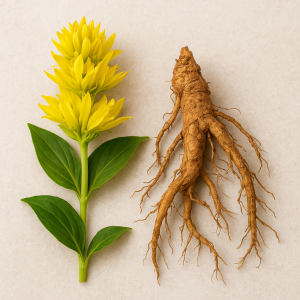
- Gentiana lutea Root Extract (Yellow Gentian)
A. Scientific Name:
Gentiana lutea
B. What it is:
Yellow gentian is a bitter root traditionally used in herbal preparations. It is harvested from mountain regions and used in small amounts.
C. Found in everyday products:
Herbal bitters
Digestive tonics
Herbal supplements
Traditional remedies
D. Why do people use it?:
Yellow gentian is used traditionally to support digestion. Its bitter taste stimulates digestive processes.
E. Safety summary:
Normal use is safe.
Precautions:
• Strong bitterness may irritate sensitive stomachs.
F. Good for:
Digestive support
Herbal tonics
Traditional remedies
G. Be careful if:
You have stomach ulcers
You are sensitive to bitter herbs
H. DIY / Usage Ideas:
Make herbal bitters
Brew small amounts as tea
Add to tinctures
I. Natural alternative category:
Ginger
Chamomile
Peppermint