- Home
- Kimchi

I. General Information
A. Scientific Name:
Lactobacillus-fermented napa cabbage and vegetables
B. Alternative Names:
Gimchi, Fermented Korean Vegetables
C. Pronunciation:
/ˈkɪmtʃi/
II. Sourcing and Origin
A. Source:
A variety of vegetables, most commonly napa cabbage and Korean radish.
B. Geographic Origin:
Korea, with a history dating back to the Goryeo Dynasty (918–1392).
C. Method of Processing:
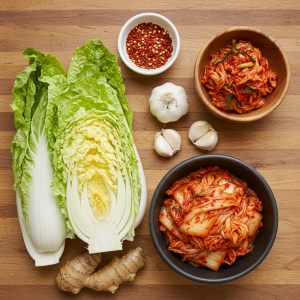
Vegetables are brined in salt water to draw out moisture. They are then mixed with a paste made of chili powder, garlic, ginger, scallions, and other seasonings. This mixture is packed into a jar and left to ferment at room temperature or in a specialized kimchi refrigerator.
III. Properties and Uses
A. Physical Properties:
A spicy, tangy, and crunchy side dish. The color ranges from bright red to deep maroon depending on the type of chili used.
B. Chemical Composition:
Rich in lactic acid bacteria (mainly Lactobacillus kimchii and Leuconostoc mesenteroides).
Contains vitamins A, B1, B2, B12, C, K.
Minerals: Calcium, iron, potassium.
Bioactive compounds: capsaicin (from chili), allicin (from garlic), gingerol (from ginger), flavonoids.
High in dietary fiber and antioxidants.
Trace alcohol (usually <0.5% in commercial brews).
C. Primary Uses:
Skincare: Antioxidant and probiotic properties may support clearer skin and balance microbiome.
Skincare: Antioxidant and probiotic compounds may support clearer skin and balance the microbiome.
Haircare: Limited direct use, but probiotics and nutrients may indirectly support scalp and hair health.
Wellness: Supports gut health, digestion, immune system, and may aid weight management.
Culinary: A staple in Korean cuisine, served as a side dish, added to soups, stews, fried rice, pancakes, and fusion recipes.
Household/Industry: Used in probiotic-rich supplements, extracts, and functional foods.
Household: SCOBY can be repurposed for pet treats, composting, or DIY crafts (like vegan “leather”).
D. Key Benefits:
Supports gut health, rich in vitamins and antioxidants, and may help with weight management.
IV. Safety and Considerations
A. Potential Allergies:
Contains various spices and ingredients, so individuals with allergies to garlic, ginger, or chili should be cautious.
B. Best Practices for Use:
Store in the refrigerator to slow down fermentation. The taste and texture will change over time.
C. Special Precautions:
Generally safe and beneficial when consumed in moderation.
May be high in sodium, people with hypertension should limit intake.
Spicy varieties may irritate sensitive stomachs.
Pregnant women should consume fresh, properly fermented kimchi to avoid contamination risks.
Contains small amounts of caffeine and alcohol.
V. Fun & Educational Facts
A. Historical Context:
Kimchi was originally a way to preserve vegetables for the winter months before refrigeration. The red chili pepper was only introduced to the recipe in the 17th century.
B. Did You Know?
There are over 200 known varieties of kimchi, each using different vegetables and seasonings.
C. DIY Recipe Idea:
Classic Kimchi involves brining napa cabbage, creating a spicy paste, and fermenting the mixture.
